Turf Cleaning
How to Clean Artificial Turf With Dogs (DIY Guide)
December 17, 2025 · Updated October 4, 2026 · Squeaky Clean Turf Team
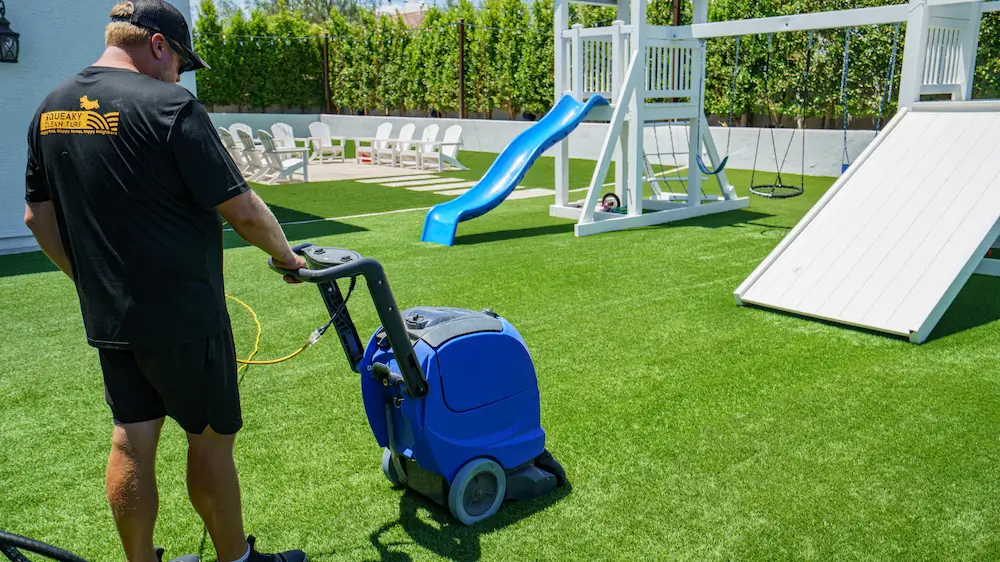
Artificial turf and dogs are a great match: no mud, no dead patches, no digging up the lawn. But turf doesn’t absorb urine the way soil does. It drains through the backing, and some of it stays behind in the backing and the infill. In Arizona heat, that residue dries, builds up, and turns into the sharp ammonia smell every turf owner with a dog eventually notices.
The good news is that a simple routine keeps most of it under control. This guide covers exactly what to do at home, how often, and the point where DIY stops working.
What you need
- A garden hose with a spray nozzle
- A broom with synthetic bristles (never wire)
- A plastic leaf rake
- Poop bags or a scooper
- An enzyme spray made for artificial turf
- Optional: a cleaner made for synthetic grass, such as our Squeaky Clean™ Formula
How to clean dog pee off artificial turf
- Rinse the spot right away if you can. The sooner urine is flushed down through the backing, the less of it stays behind. A 30-second soak with the hose does more than a long rinse hours later.
- Apply an enzyme spray. Enzyme cleaners break down the urine residue that causes smell, instead of covering it with fragrance. Follow the label and let it sit.
- Rinse again once the spray has had time to work.
- Let it dry. Turf that’s left soggy in shady spots holds smell longer.
Do this most: the one or two spots your dog uses every day. Those spots carry nearly all the odor in a typical yard.
How to clean dog poop off artificial turf
- Let it firm up if it’s soft, then pick it up with a bag or scooper.
- Hose the area to clear what’s left in the fibers.
- For a messy cleanup, use a small amount of mild soap in a bucket of water or a turf cleaner, then rinse thoroughly.
- Brush the fibers back upright once dry.
A simple routine that works
| How often | What to do |
|---|---|
| Daily | Pick up poop. In summer, rinse the main potty spot. |
| Every few days | Rinse potty areas and apply enzyme spray to the most-used spots. |
| Weekly | Rinse the whole yard. Rake up leaves and debris before they get ground in. |
| Monthly | Brush the whole lawn against the grain to stand fibers back up. Check for flat or crunchy spots. |
| Every 3–6 months | Professional deep clean with odor extraction and an infill top-off. |
In Phoenix, do your rinsing early in the morning or after sunset. Midday water evaporates before it flushes anything through, and it can leave mineral spots behind from the Valley’s hard water.
What not to do
- Don’t use bleach. It fades fibers, weakens the backing and doesn’t remove the residue causing the smell.
- Don’t pressure wash. It blows out infill and flattens blades.
- Don’t rely on vinegar. It covers the smell for a day or two without removing anything.
- Don’t use boiling water. It can melt synthetic fibers.
We go into more detail on each of these in 5 things you should never use to clean artificial turf.
Signs DIY isn’t enough anymore
Home cleaning handles fresh messes well. It can’t reach residue that has been building up in the backing for months. Call a pro when you notice:
- Smell after rain or after hosing. Water reactivates dried residue below the surface.
- Odor that’s worse every summer. Heat makes built-up residue release more ammonia smell. We explain why in why turf smells worse in summer.
- Pale, stained or discolored pet zones.
- A crunchy or stiff feel underfoot. That’s buildup in the fibers and infill. See why turf gets crunchy and matted.
- Water pooling instead of draining.
What a professional deep clean does differently
A professional clean works below the surface. We power-brush the fibers upright, vacuum out the debris and hair packed into the base, extract the urine residue from the backing and infill, apply a bleach-free cleaner, and top up odor-controlling infill where it’s thin. That’s the part no amount of hose work replaces.
Most dog owners pair a smart DIY routine with a pro clean every few months. Our Khloe and Karl packages are built around exactly that, and our pet turf cleaning page walks through the process. Curious about price? Here’s what turf cleaning costs in the Phoenix area.
Quick answers
Where to go from here
Let a pro handle it
Squeaky Clean™ Formula
The same cleaner our crews use, for in-between care.
Learn More →Shop the Cleaner
Spray, jug and refill sizes for any yard.
Learn More →Pet Turf Cleaning
Dog urine odor pulled out of the backing, not masked.
Learn More →Pet Odor & Stain Removal
Targeted treatment for the spots your dog uses most.
Learn More →Squeaky Clean Turf is based in Mesa and cleans residential and commercial turf across Greater Phoenix, including Phoenix , Scottsdale , Mesa , Glendale , Gilbert , Chandler , Tempe and Queen Creek . See every area we serve.
From the blog
Keep reading
Product Guides
What Size Turf Cleaner Do You Actually Need?
A 32 oz sprayer covers about 250 sq ft and a gallon covers about 1,000. Here is how to work backward from your yard, your dogs and your summer to the size you should actually be buying.
Read the guide →Artificial Turf
5 Things You Should Never Use to Clean Artificial Turf
Bleach, pressure washers, vinegar, solvents and hot water all damage synthetic grass. Here is why, and what to use on turf instead.
Read the guide →Turf Care
Why Artificial Turf Gets Crunchy and Matted (And How to Fix It)
Flat, stiff, or matted artificial turf is a common problem in Arizona — but it's usually fixable. Here's what causes it and how to bring your lawn back to life.
Read the guide →Ready for a Squeaky Clean Yard?
Get a free quote and we'll have you fresh in no time.
Get A Free Quote