Turf Cleaning
Keeping Turf Clean in Dry, Dusty Climates (Arizona Tips)
April 10, 2026 · Updated October 4, 2026 · Squeaky Clean Turf Team
Living in Arizona means sunshine almost every day of the year. It also means your turf is up against three things most turf in the country never deals with at this level: dust, heat and hard water. Here’s how each one wears synthetic grass down, and the routine that keeps a desert lawn looking and feeling right.
Why desert turf gets dirty faster
- Very little rain. Phoenix averages less than 8 inches a year, so nothing naturally rinses your turf. Whatever lands on it stays until you remove it.
- Fine dust. Desert dust is fine enough to work down between fibers and into the infill, where it packs in, clogs drainage and makes turf feel stiff.
- Dust storms. Monsoon season brings haboobs that can coat a whole yard in a single afternoon.
- Heat. Summer heat dries pet residue in place and makes odor stronger.
- Hard water. Valley tap water is hard. When it evaporates on turf, it leaves minerals behind on the fibers.
The desert turf routine
Rinse weekly, at the right time of day
A 5 to 10 minute rinse with a garden hose dislodges dust and keeps turf from turning that classic desert tan. Rinse early in the morning or after sunset. Midday water evaporates before it flushes anything through, and it’s the evaporation that leaves hard-water spots behind.
Remove debris before you rinse
Rinsing a yard full of leaves and dust turns it into mud in the fibers. Rake with a plastic leaf rake or use a leaf blower on a low setting first, then rinse.
Brush against the grain monthly
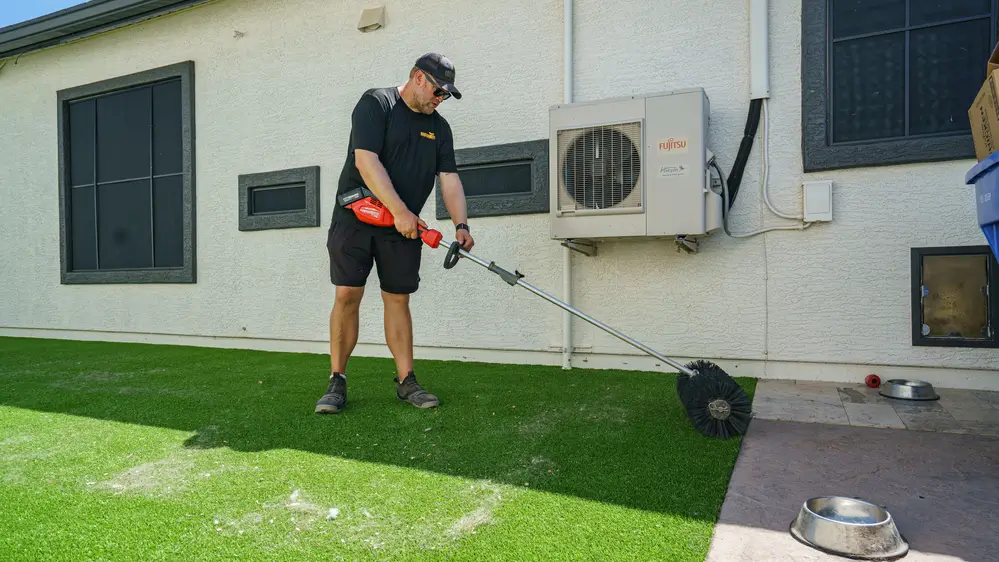
Brushing with a synthetic-bristle broom (or a power broom) stands fibers back up. Upright fibers look better, wear evenly, and trap less dust than matted ones. If your turf already feels crunchy, see why turf gets crunchy and matted.
Keep an eye on infill
Infill is the sand between the fibers. It supports the blades, helps drainage, and in pet areas, odor-controlling infill helps hold down smell. In a dry climate, infill shifts, compacts and thins out. Check it every few months by pushing your fingers down to the base: if you can feel the backing easily, it’s time for a top-up. Most yards need one every 12 to 18 months.
Plan a professional deep clean
For pet owners and high-traffic yards, a deep clean every 3 to 6 months keeps residue from building up. Yards without pets usually need one or two a year. Without it, dust, pet residue, leaves and spills accumulate below the surface, which causes that “smell after rain” effect and poor drainage.
After a dust storm
- Let the dust settle and the turf dry if rain came with it.
- Blow or rake off the loose layer first.
- Rinse thoroughly, early or late in the day.
- Brush once dry.
- If water pools afterward, dust has clogged the base and a deep clean will open it back up.
For the full storm-season routine, see our monsoon guide for Phoenix turf.
When to call a pro
If you notice persistent odor, discoloration, a crunchy feel, or water pooling instead of draining, the problem is below the surface. That’s what deep turf cleaning is for: power-brushing, vacuuming the debris out of the base, and a soft rinse. Here’s what it costs in the Phoenix area, or get a free quote.
Quick answers
Where to go from here
Let a pro handle it
Deep Turf Cleaning
The reset after dust storms and monsoon runoff.
Learn More →Turf Odor & Residue Treatment
For the smell that comes back every time it heats up.
Learn More →Debris & Pet Hair Removal
Leaves, dust and fur out of the blades in one pass.
Learn More →Turf Cleaning Cost
Phoenix pricing by yard size, with no surprises.
Learn More →Squeaky Clean Turf is based in Mesa and cleans residential and commercial turf across Greater Phoenix, including Phoenix , Scottsdale , Mesa , Glendale , Gilbert , Chandler , Tempe and Queen Creek . See every area we serve.
From the blog
Keep reading
Seasonal Tips
Monsoon-Proofing Your Turf: A Phoenix Storm-Season Guide
Monsoon season blows dust, debris and grit deep into your turf in a single afternoon. Here's how to protect synthetic grass before, during and after Arizona's summer storms.
Read the guide →Turf Care
Why Artificial Turf Gets Crunchy and Matted (And How to Fix It)
Flat, stiff, or matted artificial turf is a common problem in Arizona — but it's usually fixable. Here's what causes it and how to bring your lawn back to life.
Read the guide →Pet Odors
Why Your Artificial Turf Smells Worse in Summer (and How to Fix It)
If your turf smells fine in winter but reeks of dog urine by July, you're not imagining it. Here's the chemistry behind summer turf odor in Phoenix — and how to actually stop it.
Read the guide →Ready for a Squeaky Clean Yard?
Get a free quote and we'll have you fresh in no time.
Get A Free Quote