
Artificial Turf
Artificial Turf vs. Natural Grass: Which Is Easier to Maintain?
March 2, 2026 · Updated October 4, 2026 · Squeaky Clean Turf Team
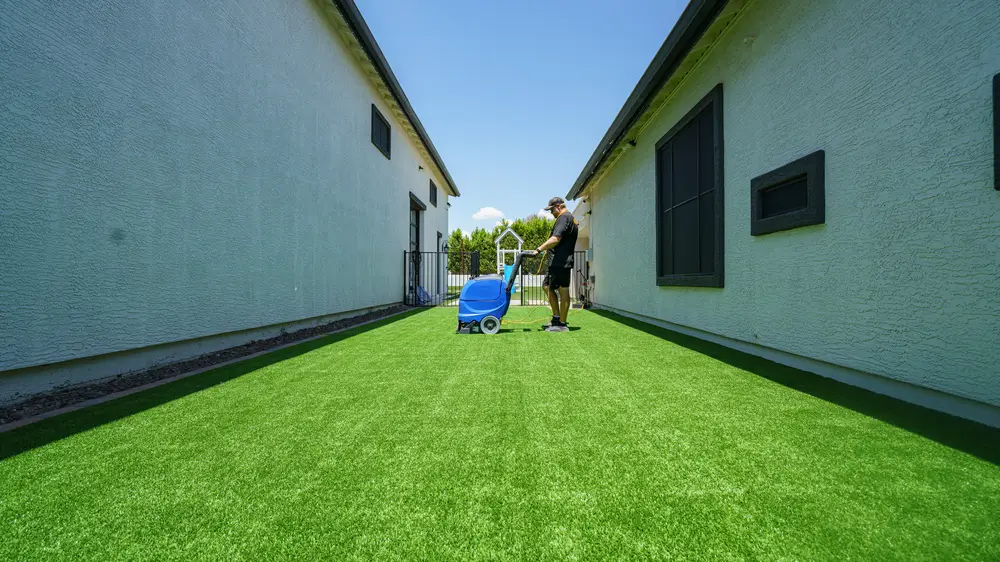
When homeowners start thinking about upgrading their yard, one of the first questions that comes up is: “Should I stick with natural grass or switch to artificial turf?” Both can look great. The maintenance story is very different, especially in Arizona, where heat, water restrictions and dogs change the math.
Here’s an honest side-by-side from a company that cleans turf for a living, including the parts turf salespeople tend to skip.
What natural grass takes in Arizona
- Mowing every week or two in the growing season, and overseeding with winter rye if you want it green year-round
- Watering almost every day in summer. In Valley homes, outdoor watering is usually the largest share of household water use, and grass is the thirstiest part of most landscapes
- Fertilizing, aerating and dethatching a few times a year
- Weed control, especially after monsoon rains
- Repairing brown urine spots, worn paths, dig holes and heat-stressed patches
- Mud, which ends up on dogs, kids and floors
What artificial turf takes
Artificial turf removes mowing, watering, fertilizing, weeding and reseeding. It doesn’t remove maintenance entirely. It still needs:
- Debris pickup. Leaves and dust don’t decompose into soil, so they have to be raked or blown off.
- Rinsing, more often in pet areas, to flush dust and urine through the backing.
- Brushing against the grain every month or so to keep fibers upright.
- Infill top-ups when the sand between the fibers thins out.
- Professional deep cleaning once or twice a year, or every 3 to 6 months with dogs, to remove residue that rinsing can’t reach.
Side by side
| Natural grass | Artificial turf | |
|---|---|---|
| Weekly time | Mowing, edging, watering checks | A quick rinse and debris pickup |
| Water | Heavy, year-round | Rinsing only |
| With dogs | Dead spots, mud, digging | No mud or dead spots, but odor builds up without cleaning |
| Summer heat | Stress, browning | Hot surface on summer afternoons |
| Monsoon | Weeds after rain | Dust and debris to clear |
| Professional help | Landscaper, often monthly | Deep clean once or twice a year (more with pets) |
The part people don’t expect: pets
Turf is a great choice for dogs, with one catch. On a natural lawn, urine soaks into soil, where it eventually breaks down (and leaves brown spots). On turf, urine drains through the backing, and some of it stays behind in the backing and infill. In Arizona heat, that residue dries and builds up, and it’s the source of the ammonia smell turf owners notice in summer.
That’s not a reason to avoid turf. It just means pet areas need a routine: frequent rinsing, an enzyme spray for fresh spots, and a professional deep clean every few months. Our DIY guide for turf with dogs covers the at-home side, and pet turf cleaning covers the professional side.
So which is easier?
For an Arizona homeowner with pets and a busy schedule, artificial turf wins on time and water by a wide margin. The maintenance is lighter and less frequent, as long as you plan for it. The yards that disappoint are the ones bought as “zero maintenance” and never cleaned, which end up flat, crunchy and smelly within a couple of summers. We cover that outcome, and how to avoid it, in cleaning vs. replacing artificial turf.
If you already have turf, our Khloe and Karl packages handle the professional part on a one-time or recurring basis. Here’s what turf cleaning costs in the Phoenix area.
Quick answers
Where to go from here
Let a pro handle it
Turf Cleaning Cost
Phoenix pricing by yard size, with no surprises.
Learn More →Packages & Memberships
One-time cleans and recurring plans compared.
Learn More →Deep Turf Cleaning
Power-broom, vacuum and rinse to stand fibers back up.
Learn More →Debris & Pet Hair Removal
Leaves, dust and fur out of the blades in one pass.
Learn More →Squeaky Clean Turf is based in Mesa and cleans residential and commercial turf across Greater Phoenix, including Phoenix , Scottsdale , Mesa , Glendale , Gilbert , Chandler , Tempe and Queen Creek . See every area we serve.
From the blog
Keep reading
Turf Care
Cleaning vs. Replacing Artificial Turf: Which Saves More?
When turf smells or looks tired, replacement feels like the only option. In almost every case, it isn't. Here's how to tell whether your turf needs a clean or a full replacement.
Read the guide →Turf Care
Why Artificial Turf Gets Crunchy and Matted (And How to Fix It)
Flat, stiff, or matted artificial turf is a common problem in Arizona — but it's usually fixable. Here's what causes it and how to bring your lawn back to life.
Read the guide →Seasonal Tips
Monsoon-Proofing Your Turf: A Phoenix Storm-Season Guide
Monsoon season blows dust, debris and grit deep into your turf in a single afternoon. Here's how to protect synthetic grass before, during and after Arizona's summer storms.
Read the guide →Ready for a Squeaky Clean Yard?
Get a free quote and we'll have you fresh in no time.
Get A Free Quote