
Seasonal Tips
Is Your Turf Ready for Backyard Season? A February Checklist
February 3, 2026 · Updated October 4, 2026 · Squeaky Clean Turf Team
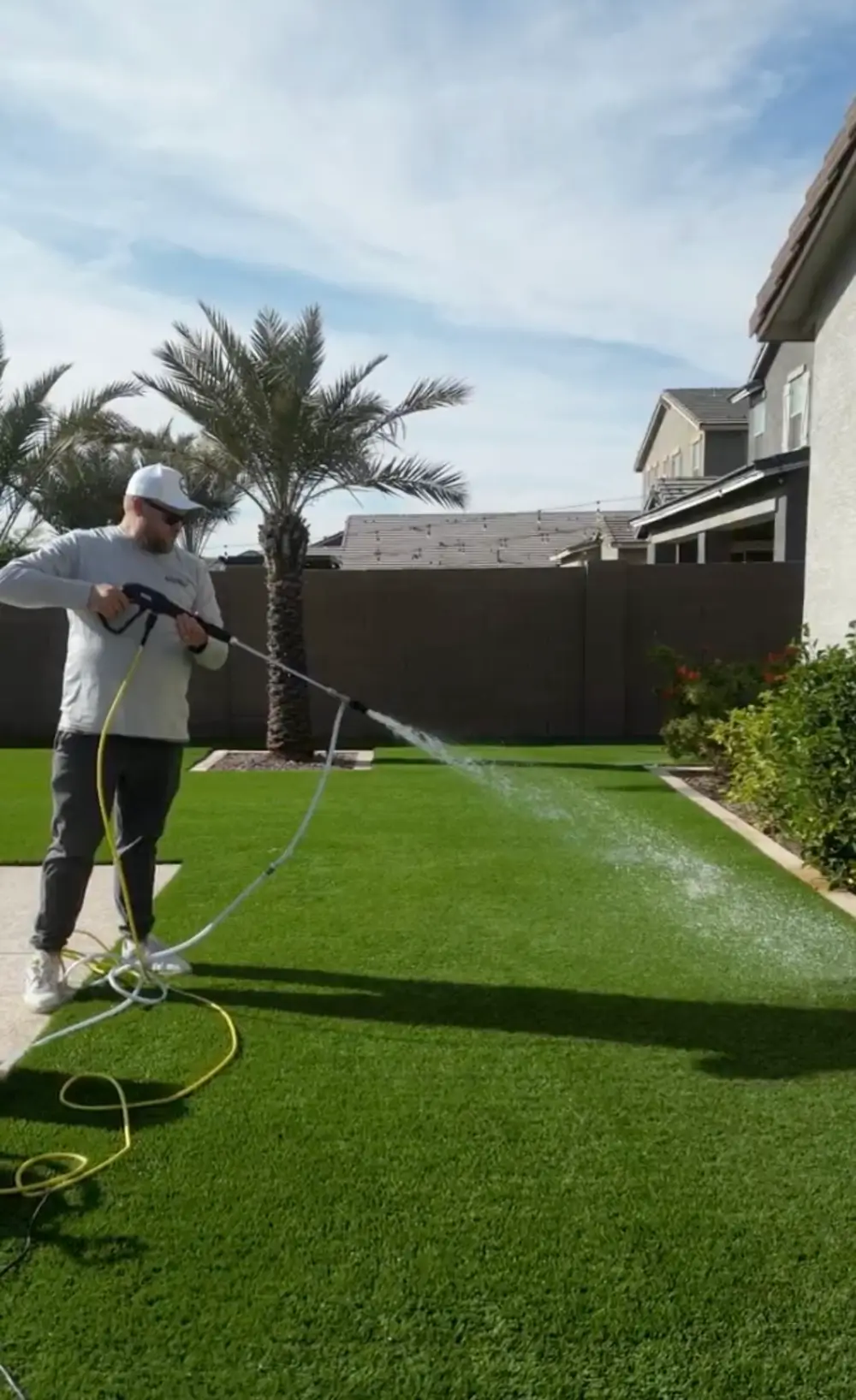
In Arizona, backyard season doesn’t wait for spring. As soon as February rolls around and the days start warming up, the yard turns back into the living room: birthday parties, spring training weekends, dinners outside, and dogs who want to be out all day.
February is also the best time to get your turf ready. It’s the last stretch before the heat, when a fresh start lasts longest. Whatever’s sitting in your turf now (winter debris, built-up pet residue, compacted dust) gets baked in once temperatures hit the 90s. This checklist takes about an hour.
The February turf checklist
1. Walk the whole yard
Look for matted or flattened areas, piles of leaves along walls and fences, sun-faded spots, and the “hot zones” your dog uses most. Make a quick note of anything that looks or smells off. This is your to-do list for the rest of the checklist.
2. Clear out winter debris
Rake leaves, needles and twigs with a plastic leaf rake, especially along edges and under trees. Debris that sits all winter breaks down into fine organic material that clogs drainage and holds odor.
3. Inspect seams and edges
Winter winds can lift edges that aren’t well anchored. Walk the seams and perimeter. If a seam is separating or an edge is curling, get it repaired before summer heat makes the backing expand and the gap gets bigger.
4. Test drainage
Run a hose on one spot for about a minute and watch. Water should disappear within a few seconds of turning it off. If it pools or runs off to the side, the base or infill is likely clogged with dust and debris, and a deep clean usually restores drainage.
5. Check the infill
Push your fingers into the turf near the base of the fibers. You should feel a layer of infill. If you can feel the backing easily, the blades lie flat, or the turf looks thin and shiny, it needs a top-up. Thin infill means fibers wear faster and pet areas hold more smell. Read more about odor-controlling infill.
6. Sniff test the pet zones
On a warm afternoon, kneel down near the spots your dog uses. If you already smell ammonia in February, it will be much stronger by June. That’s residue built up in the backing, and it’s the right time to deal with it. Our guide on why turf smells worse in summer explains why.
7. Book your first deep clean
Spring is the busiest season for turf cleaning in the Valley. Booking in February gets you a cleaner yard for the whole season and a better choice of dates.
Why February, specifically?
- Cleaning before the heat lasts longer. Residue removed in February doesn’t get the chance to bake into the backing over the summer.
- Guests are coming. Spring is peak entertaining season in Arizona.
- It sets up the year. A spring clean plus a fall clean after monsoon season is the rhythm that keeps most Arizona yards in good shape. See our monsoon guide for the second half of the year.
Keep it up between cleanings
Once the yard is reset, a short weekly routine keeps it that way: pick up after your dog, rinse potty areas every few days, rake debris, and brush the fibers upright once a month. Our DIY guide for turf with dogs covers the full routine.
Ready to get on the schedule? See what turf cleaning costs, or book now and we’ll have you ready for backyard season.
Quick answers
Where to go from here
Let a pro handle it
Deep Turf Cleaning
The reset after dust storms and monsoon runoff.
Learn More →Turf Odor & Residue Treatment
For the smell that comes back every time it heats up.
Learn More →Squeaky Clean™ Formula
The same cleaner our crews use, for in-between care.
Learn More →Shop the Cleaner
Spray, jug and refill sizes for any yard.
Learn More →Squeaky Clean Turf is based in Mesa and cleans residential and commercial turf across Greater Phoenix, including Phoenix , Scottsdale , Mesa , Glendale , Gilbert , Chandler , Tempe and Queen Creek . See every area we serve.
From the blog
Keep reading
Product Guides
What Size Turf Cleaner Do You Actually Need?
A 32 oz sprayer covers about 250 sq ft and a gallon covers about 1,000. Here is how to work backward from your yard, your dogs and your summer to the size you should actually be buying.
Read the guide →Seasonal Tips
Monsoon-Proofing Your Turf: A Phoenix Storm-Season Guide
Monsoon season blows dust, debris and grit deep into your turf in a single afternoon. Here's how to protect synthetic grass before, during and after Arizona's summer storms.
Read the guide →Pet Odors
Why Your Artificial Turf Smells Worse in Summer (and How to Fix It)
If your turf smells fine in winter but reeks of dog urine by July, you're not imagining it. Here's the chemistry behind summer turf odor in Phoenix — and how to actually stop it.
Read the guide →Ready for a Squeaky Clean Yard?
Get a free quote and we'll have you fresh in no time.
Get A Free Quote